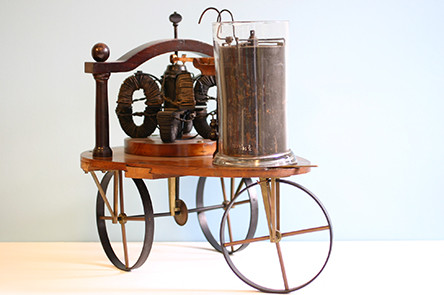
The very first electric vehicle comes from the Netherlands and was developed/invented by Sibrandus Stratingh, Professor of Chemistry & Technology at the University of Groningen.
- Own weight: 3kg
- Payload: 1,5kg
- Run time: 20 minutes on a full battery
This is of course not necessary right away, but like any change, the switch to driving electric also takes some getting used to and gaining experience. By taking the step now, you are already creating the necessary experience for the complete switch to zero emission city logistics. In addition, there are various other reasons, such as that you can already win a tender more often in the construction industry because you have emission-free vehicles. Another reason could be that you want to be sure that you have the necessary electricity.
This has to do, for example, with the deployment, including the required loading volume and loading capacity. But also matters such as route planning, the number of stops during a route and the structure of the planning. In addition, it is important never to consider the vehicle as separate from the charging infrastructure. Are you going to charge at depots, fast charging on the road, etc. There are many factors that determine the success.
The range of a fully electric vehicle is mainly determined by: the capacity (kWh) of the battery, the weight of the vehicle, the consumption of the vehicle, the driving style and the weather. With WLTP (Worldwide Harmonized Light Vehicle Test Procedure) you gain insight into the energy consumption and the real range of electric vehicles. That way you can better compare electric vehicles.
Driving zero emission is not only a different driving experience, the impact on the organization and the environment is significant. For customers, it means, for example, that you can meet changing (sustainable) requirements. It is easier to meet the requirements of the government. The logistics planning is changing. The management benefits from Co2 savings, for example in CSR reports. And so on.
Yes and no. A battery provides extra weight. However, EVs do not have a combustion engine and that also saves weight. The charging capacity differs per vehicle and, in addition to the battery, also depends, for example, on the materials used.
Electric vehicles have now been developed to such an extent that the costs, calculated over a few years (TCO), can already be lower than diesel variants. For this it is important to acquire good advice about the type of vehicle that suits your work, charging infrastructure and support for repair and maintenance.
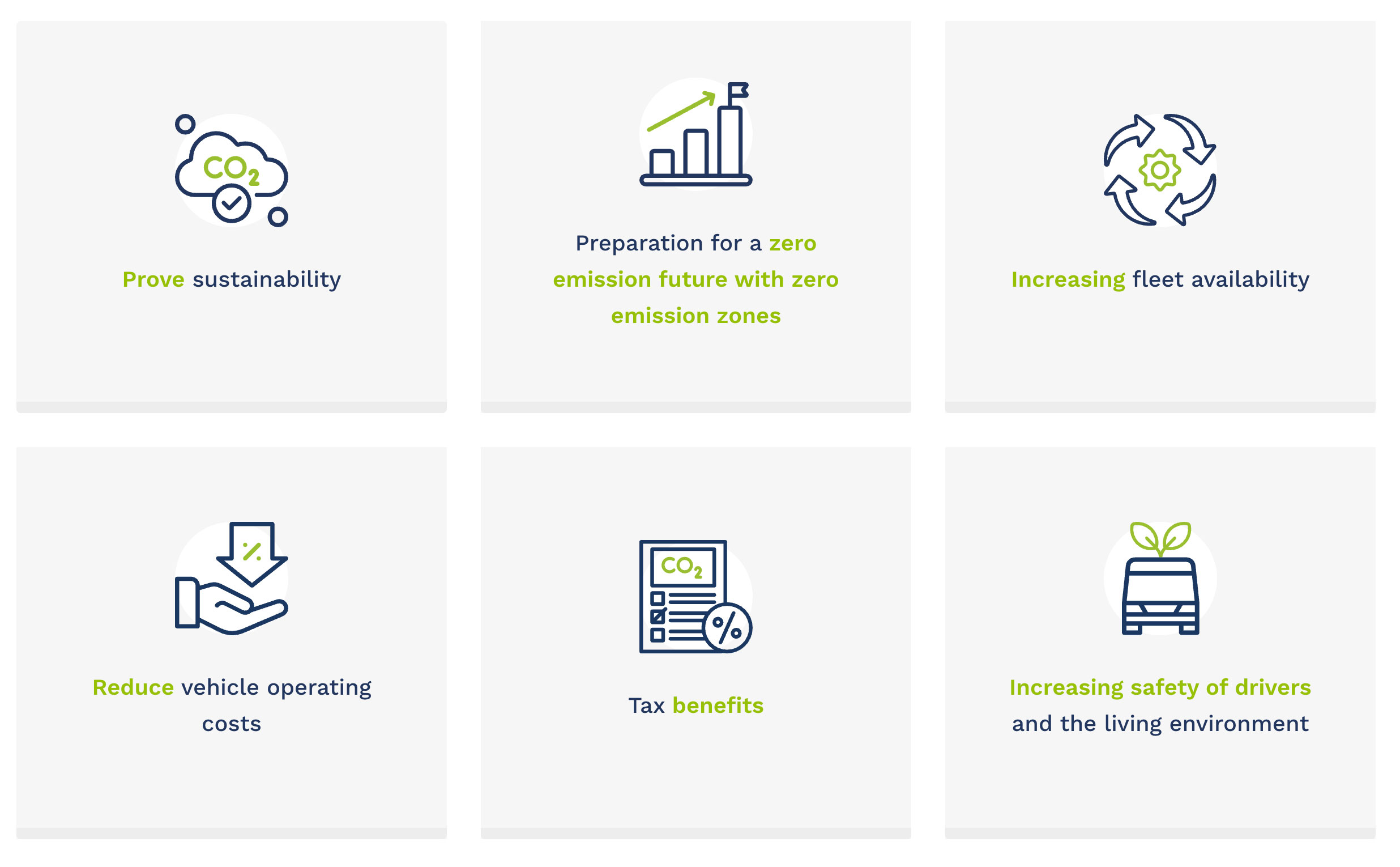
The six benefits of Bluekens EV
Thanks to our unique 360° approach, we offer you six strong advantages:
The future of Bluekens EV is electric. What do you know about the development of electrification? Test your knowledge!
The very first electric vehicle comes from the Netherlands and was developed/invented by Sibrandus Stratingh, Professor of Chemistry & Technology at the University of Groningen.
Introducing these zero emission zones will save approximately 1 megaton of CO2 per year by 2030. This is comparable to the total annual emissions from natural gas use of all households in The Hague and Rotterdam combined. In addition, the air is much cleaner. Traffic is, in cities, the main source of air pollution that people breathe in directly. Cities that will introduce a zero emission zone include:
kW is the available charging capacity of a charging point and the charging capacity of an electric car and kWh is the energy content of the battery.

You must have arrived here in one of our rechargeable models. Well done! Team up with Bluekens EV to turn your knowledge into electrifying actions.

You’re halfway there, or rather: well on your way. Well done! Team up with Bluekens EV to anticipate the road ahead.

It’s not easy being green. We all have our challenges when it comes down to electrification, but don’t worry. Bluekens EV has all the skills and knowledge you need to be ready in time and on budget.
| Name | Points |
|---|
Restart quiz